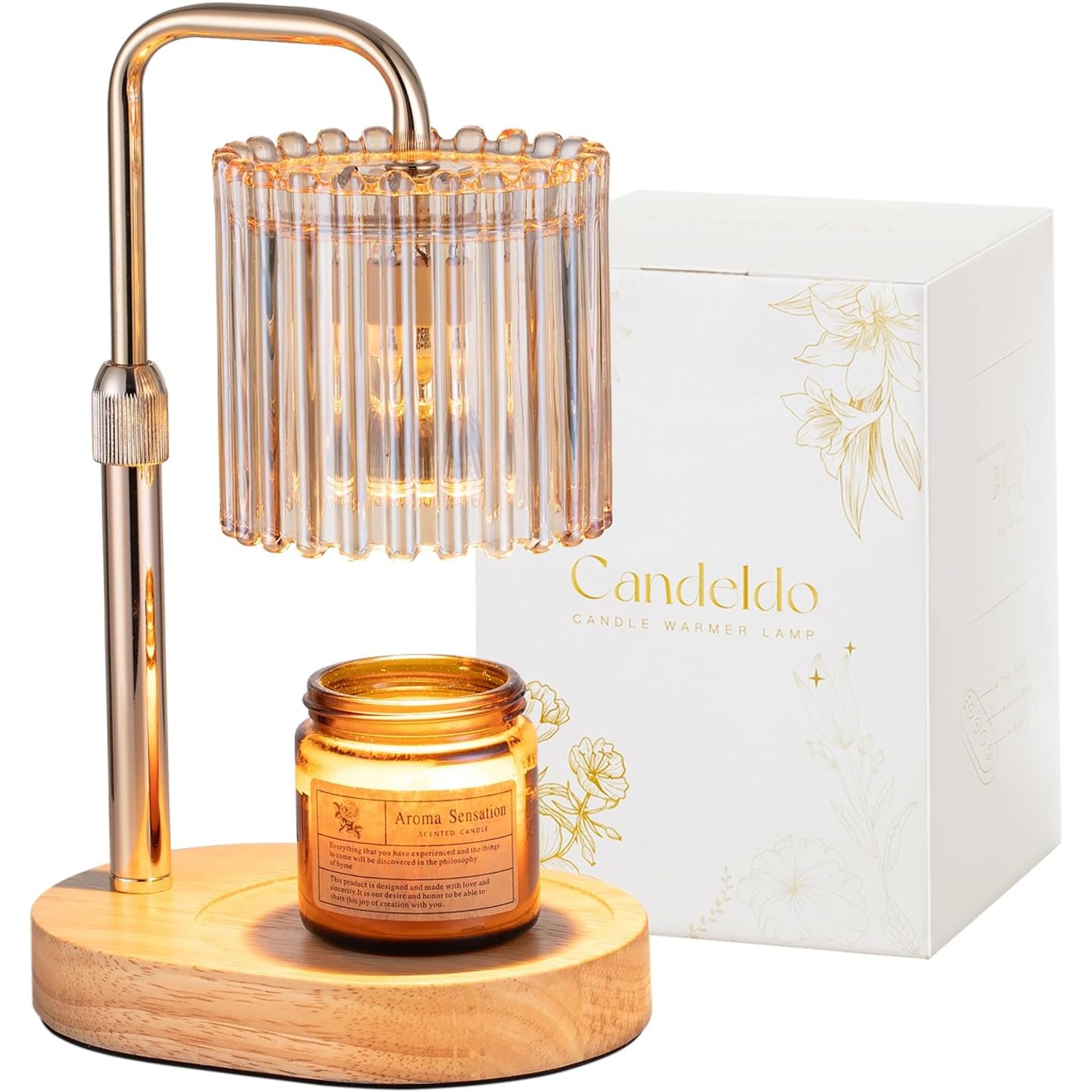
The complete guide
Which candles work best in a warmer lamp — and which to avoid
A candle warmer lamp does not care about wicks, but it cares a great deal about wax, jar shape and size. Choosing well is the difference between a room that smells wonderful in fifteen minutes and a candle that sits there looking pretty and doing nothing.
Wax type matters most
Soy and coconut wax are the easiest to warm. They have low melt points, they turn liquid at the sort of temperature a warming bulb produces, and they release fragrance readily. If you are buying candles specifically to use in a warmer, these are the safe choice.
Paraffin works perfectly well but has a higher melt point, so it likes the shade a little closer or the brightness a step higher. Give it a few extra minutes before you decide it is not working.
Beeswax is the awkward one. It melts hot, it holds onto its scent, and it is usually only lightly fragranced to begin with. A beeswax candle in a warmer will glow beautifully and smell of very little.
Wide beats tall
This is the single most useful thing to know. Everything happens at the surface, so scent throw depends on surface area, not on how much wax is in the jar.
A squat three-wick candle 10 cm across will fill a living room faster than a slim apothecary jar holding the same weight of wax. If you have a choice, buy the wide one. If you already own the narrow one, it still works — expect it to scent one room rather than a floor of the house.
Jars and containers
Clear glass is ideal: it takes the heat, and you can see the pool forming, which makes setting the height much easier.
Metal tins work and heat up faster than glass, so start with the shade a little higher than you otherwise would and check after ten minutes.
Ceramic is fine but opaque, so you are judging by scent rather than sight.
Avoid anything in a plastic vessel, anything with dried flowers, wooden wicks sticking up, or decorative wax ornaments on the surface — those are made for a flame that stays in the middle, not for a warm surface that melts everything at once.
Also skip candles with a lid you cannot remove, and any candle whose jar is wider than the lamp's base plate.
Reading the melt pool
Once you have run it for twenty minutes, look at the surface. You want a shallow, even pool from edge to edge, three or four millimetres deep. That is the sign everything is set correctly.
A dry ring at the edges means not enough heat: lower the shade or step the brightness up.
A deep well in the centre, or wax that smells sharp and slightly burnt, means too much: raise the shade or turn it down. Overheated fragrance oil smells thin and chemical, and it is the one way to genuinely spoil a good candle in a warmer.
Getting more life out of the candles you have
The warmer is at its best on candles that a flame has already treated badly. A tunnelled candle with a crater down the middle and centimetres of wax welded to the glass will level itself out over two or three sessions, because the whole surface melts rather than just the centre.
Old candles that have lost their throw often come back too — a flame burns off fragrance along with wax, while a warmer just lifts what is left.
And when a candle really is finished, the last stubborn centimetre in the bottom of the jar will melt clean, which makes the glass far easier to wash out and reuse.
The short version
Soy or coconut wax, wide rather than tall, in a glass jar. Twenty minutes to a shallow even pool. Dry edges mean go closer or brighter; a burnt smell means back off. Avoid plastic, dried flowers and beeswax. Use it to rescue the tunnelled candles you have already given up on.