The complete guide
Decorative candle warmers: what you gain and what you give up
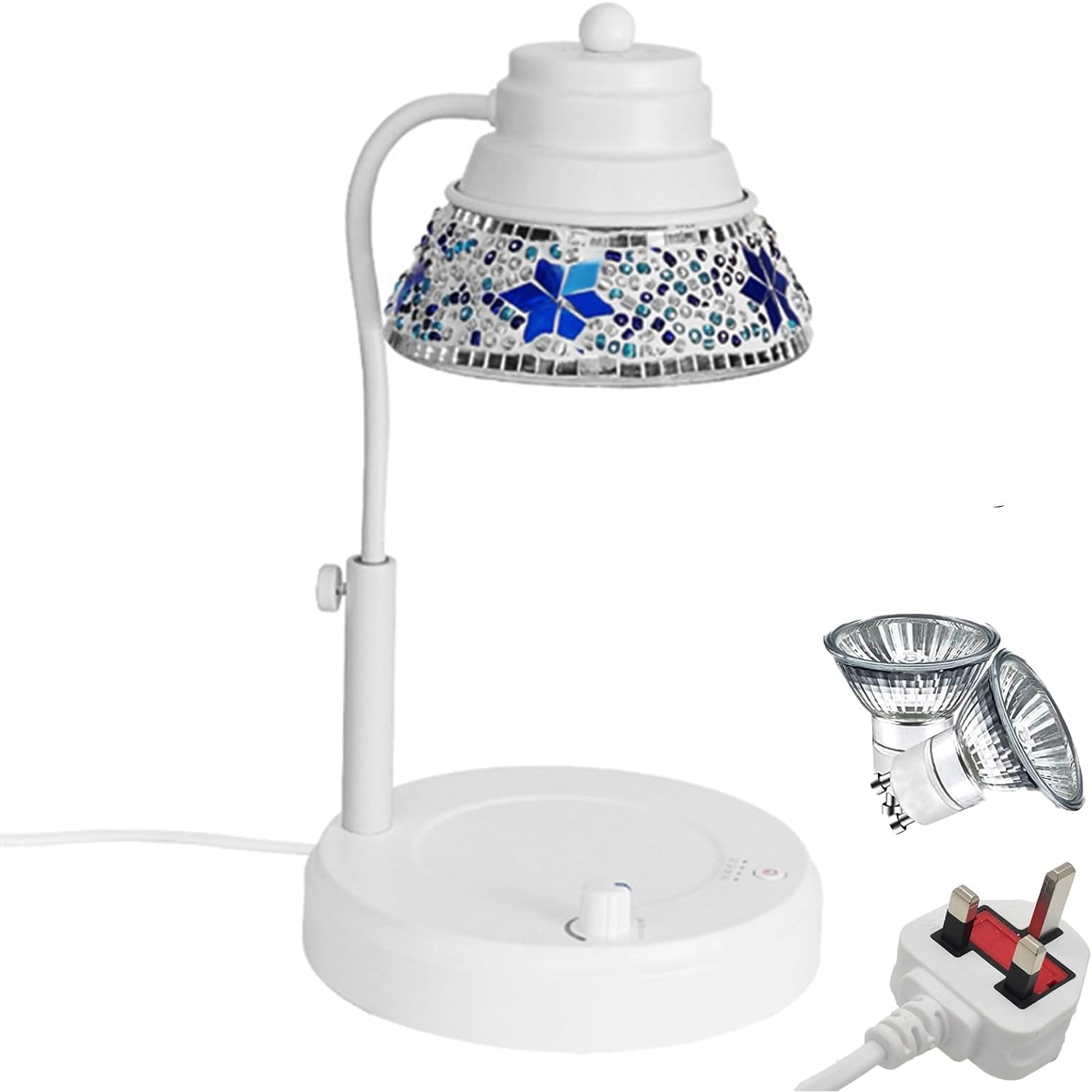
Most candle warmers are quiet objects designed to fit in. A mosaic lamp is not, and it is worth being clear about the trade before you buy one.
What you gain
Light with a pattern in it. A clear glass shade lights a candle. A mosaic shade projects — coloured shapes on the ceiling and the wall, moving slightly as you move past it. In a dim room it changes the whole atmosphere in a way a plain shade cannot.
Something to look at when it is off. Nine hours out of ten, a candle warmer is switched off and just sitting there. Clear glass looks like empty glassware. A tiled shade looks like an ornament.
A real object. Hand-set tiles mean small irregularities, slight variations in spacing, colours that catch differently. That is what people mean when they say something has character.
What you give up
Brightness. Coloured glass absorbs light, so a mosaic lamp glows rather than shines. If you wanted a lamp that also lights a corner of the room, choose clear glass.
Some heat efficiency. More of the bulb's output is absorbed by the shade, so a mosaic warmer can take slightly longer to build a full melt pool. Allow a few extra minutes, and use a brighter setting than you might with clear glass.
Easy cleaning. Grouting and tile edges collect dust and cannot be wiped with a damp cloth or soaked. A soft dry brush every few weeks handles it, but it is a minute of care a plain shade does not ask for.
Robustness. A single moulded shade will survive a knock that would loosen a tile. Mosaic lamps want to live somewhere they will not be brushed past.
Who should buy one
If a candle warmer in your house is going to sit on an open shelf or a mantel in a room you actually spend evenings in, a decorative shade earns its price. If it is going to work quietly on a bedside table and be judged purely on scent, a clear-glass lamp will do that job better and cost less.
Living with one
Give it a spot with space around it. Dust the shade with a dry brush rather than a cloth. Run it a little brighter than you would a clear lamp and give the melt pool an extra five or ten minutes to form. Support it from the base when moving it, and always after it has cooled.
Do that and it will look better on year three than most homeware does on day one.
The short version
You are buying pattern, colour and presence, and paying for it in brightness, melting speed and fragility. If the lamp is going to be seen, that is a good trade. If it just needs to work, buy clear glass.